

Warm Thanksgiving Puts Leftover Safety on the Table in Compton Kitchens |
With highs forecast in the 80s, the USDA's two-hour rule, shallow containers and a 165-degree reheat are the basics for turkey, sides and gravy |
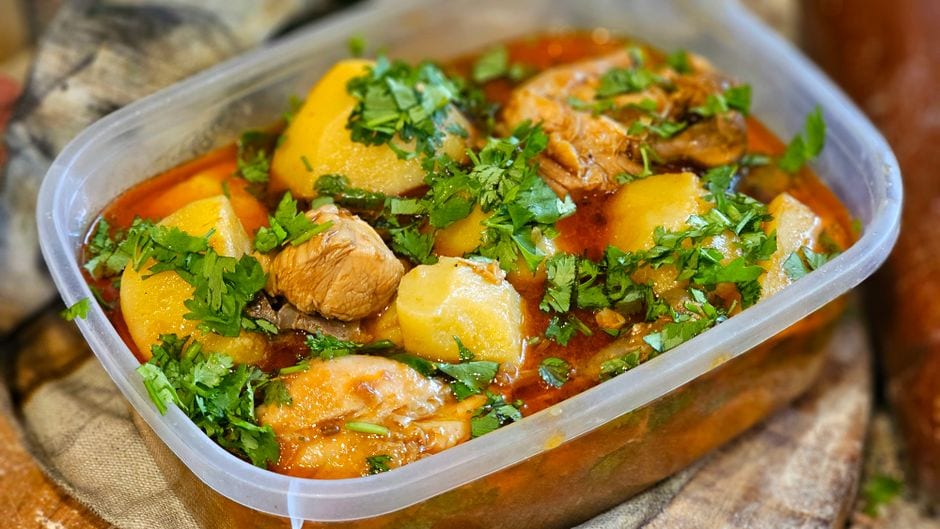
Thanksgiving in Compton is shaping up to feel more like late summer, and that changes how long the turkey and the macaroni and cheese can safely sit out.
The National Weather Service point forecast for Compton calls for a sunny Thursday with a high near 82, followed by a high near 85 on Friday.
Warm kitchens and long, lingering dinners make the federal food-safety basics worth a second look before the plates come out.
The two-hour rule
The U.S. Department of Agriculture's Food Safety and Inspection Service says leftovers should go into the refrigerator within two hours of cooking, or within two hours of coming off a warming tray or slow cooker.
Perishable food that has been at room temperature for more than two hours should be thrown out, the agency says.
That window shrinks to one hour when the temperature is above 90 degrees, which matters for families eating on a hot patio or in a crowded, warm kitchen.
The USDA advises keeping cold dishes at 40 degrees or below and hot dishes at 140 degrees or above while they are being served.
Cool it fast
Large amounts of food cool more safely when they are split into shallow containers, according to the USDA.
A whole turkey should be carved into smaller pieces before it goes into the refrigerator, though the legs and wings can stay whole.
Wrapping or sealing leftovers in airtight packaging helps keep out bacteria and refrigerator odors.
How long it keeps
Refrigerated leftovers are good for three to four days, the agency says, which puts the cutoff for Thursday's turkey around Monday.
Frozen leftovers keep their best quality for three to four months, and they stay safe longer, though they may lose flavor and texture.
Reheat all the way
The USDA says leftovers should be reheated to 165 degrees, checked with a food thermometer in several spots.
Gravy, sauces and soups should be brought to a rolling boil.
In the microwave, covering the dish and stirring or rotating it helps it heat evenly.
Frozen leftovers can go straight to reheating without thawing first, the agency says; it simply takes longer.
For thawing, the refrigerator is the safest method, while food thawed in cold water or the microwave should be cooked before it is refrozen.
A warm holiday is a reason to clear the table a little sooner, not to skip the second helping.
Sources: USDA Food Safety and Inspection Service, "Leftovers and Food Safety" (fsis.usda.gov/food-safety/safe-food-handling-and-preparation/food-safety-basics/leftovers-and-food-safety); National Weather Service point forecast for Compton (forecast.weather.gov/MapClick.php?lat=33.8958&lon=-118.2201).
Photo by Muhammad Khawar Nazir on Pexels |
0 Comments
Join the conversation
Be the first to comment
Share your thoughts above.